Auction day doesn’t have to be the end. CDF loans legally stop foreclosure, giving you time to sell at fair value, refinance, or repair. Avoid fire-sale losses and deficiency judgments. Real solutions. No gimmicks. Call (626) 796-1680 or visit capitaldf.com to explore your options today.
Ground-Up Construction – Where Coffee, Cash Flow, and Contingencies Keep You Alive
Ground-up construction runs on three essentials: coffee, cash flow, and contingencies. In California’s tough market, rising costs and labor shortages make these resources critical. Without coffee, you’re drained. Without cash, work halts. Without contingency, surprises derail budgets. Capital Direct Funding structures flexible financing to keep all three flowing—so projects stay alive.
California's 2025 Regulatory Changes: Impact on Blanket Loan Strategies
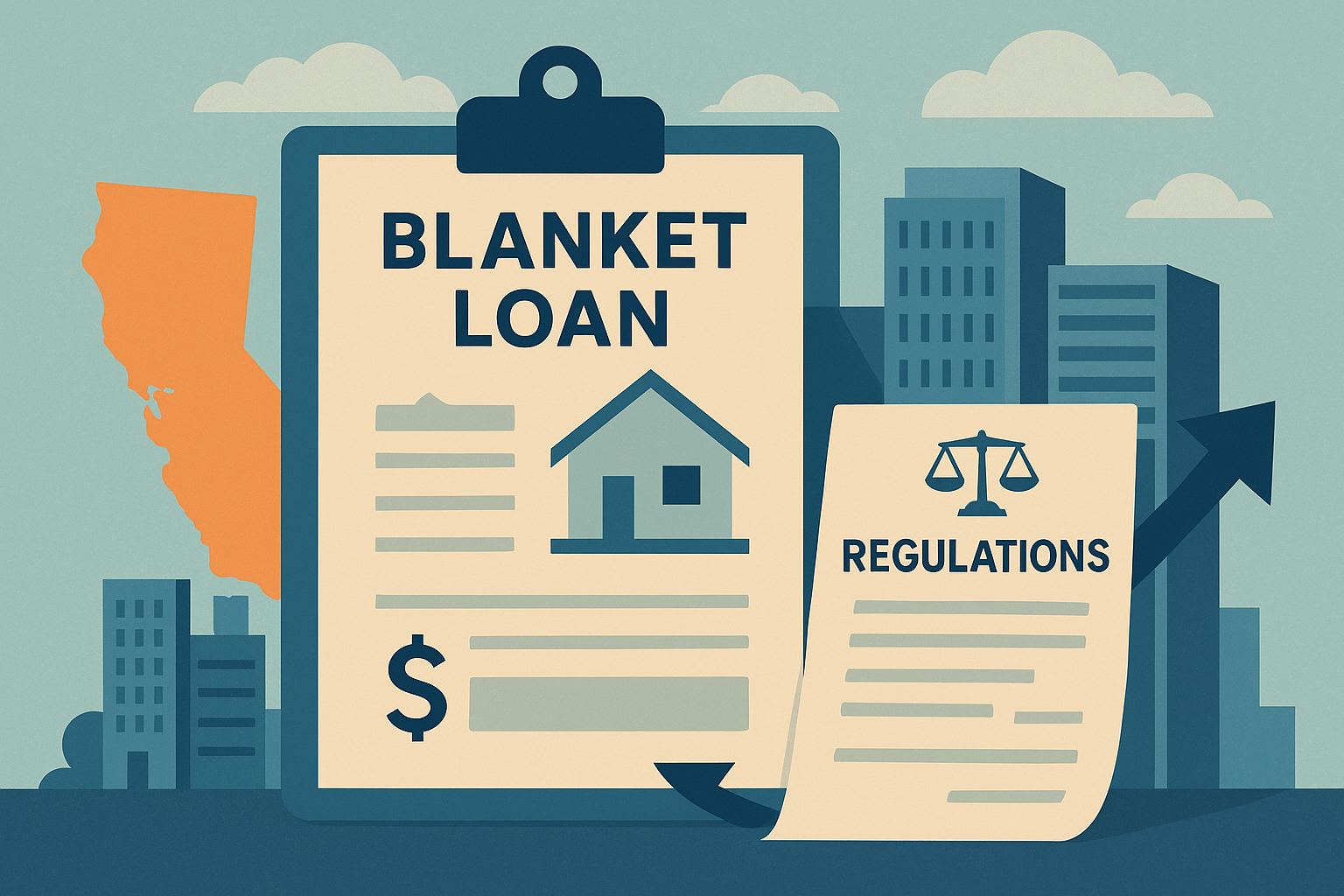
California’s 2025 lending reforms are reshaping blanket loans and commercial financing. With SB 1286 expanding borrower protections, AB 130 setting stricter servicing rules, and CFL compliance enforcement rising, investors face new timelines and documentation demands. Understanding these regulations helps borrowers secure protections, while lenders who master compliance gain trust and a competitive advantage.
Opening California’s Housing Market to Global Buyers
California real estate attracts global investors, but traditional banks often block access for foreign nationals and ITIN holders. At Capital Direct Funding, we leverage Non-QM tools like DSCR, ITIN, and bank statement loans to open doors. Our service-focused approach ensures international clients achieve ownership and investment opportunities with speed, trust, and flexibility.
The Complete Guide to P&L Statement Mortgages for Self-Employed Borrowers
Profit & Loss statement mortgages represent a sophisticated solution for established business owners whose financial complexity goes beyond simple bank deposits. If your business involves significant revenue with substantial operating expenses, inventory costs, or multiple revenue streams, a P&L mortgage might be your optimal path to homeownership.
Understanding P&L Mortgages
A P&L mortgage uses your business's profit and loss statement, prepared by a licensed CPA, to verify income instead of tax returns. The lender reviews your actual business profitability as documented by a financial professional, not your taxable income after deductions. This approach recognizes that many legitimate business expenses reduce taxable income but don't impact your actual ability to pay a mortgage.
Who Benefits Most
P&L mortgages work particularly well for business owners with complex operations: those with multiple employees, significant inventory or equipment costs, various revenue streams requiring consolidation, or substantial non-cash deductions like depreciation. They're ideal when bank statements alone don't tell your complete financial story.
The CPA's Critical Role
Your CPA becomes a key partner in the P&L mortgage process. They must prepare a detailed profit and loss statement covering 12-24 months, provide a letter attesting to its accuracy, and sometimes complete a standardized form from the lender. The CPA's credibility and license are on the line, ensuring the lender receives accurate information.
The P&L statement should include gross revenue from all sources, detailed operating expenses, clear calculation of net profit, and year-over-year comparisons if applicable. Some lenders also require a balance sheet and cash flow statement for a complete financial picture.
Documentation Requirements
Beyond the CPA-prepared P&L, you'll typically need 3-6 months of business bank statements for verification, a business license and registration documents, a year-to-date P&L if applying mid-year, and a letter explaining any unusual items or significant changes. Some lenders also request contracts or invoices supporting your revenue claims.
The Underwriting Process
Lenders evaluate P&L mortgages differently than traditional loans. They examine business stability and longevity, industry-standard profit margins, consistency of earnings over time, and the relationship between your P&L and bank deposits. They're looking for sustainable profitability, not just high revenue.
Underwriters typically calculate your qualifying income by taking your net profit from the P&L, adding back certain non-cash expenses like depreciation, applying an industry-specific expense ratio, and determining a monthly qualifying income. This often results in higher qualifying income than tax return-based calculations.
Advantages and Considerations
P&L mortgages offer significant advantages: they reflect true business profitability, work for newer businesses with just one year of history, accommodate complex business structures, and provide faster processing than tax return amendments.
However, they require strong CPA relationships, typically demand 15-25% down payments, carry interest rates 1-3% above conventional mortgages, and need businesses showing consistent profitability.
Maximizing Your Approval Chances
Success requires preparation. Work with your CPA months before applying to ensure clean, detailed statements. Maintain organized financial records throughout the year. Keep business and personal finances strictly separated. Document any unusual transactions or one-time events. Show stable or growing revenue trends.
Common Pitfalls to Avoid
Don't mix personal and business expenses in your statements. Avoid large, unexplained fluctuations in revenue or expenses. Don't attempt to prepare statements yourself – professional CPA preparation is mandatory. Never inflate numbers – underwriters verify against bank statements.
Making the Decision
P&L mortgages make sense when your business profitability significantly exceeds taxable income, you have complex operations requiring professional accounting, you need financing faster than tax amendments would allow, or your CPA can clearly document sustainable profits.
At Capital Direct Funding, we've guided hundreds of business owners through successful P&L mortgage applications. We understand what underwriters seek and help you present your business's true strength.

Contact us at (626) 796-1680 or visit capitaldf.com to discuss whether a P&L mortgage aligns with your goals.
Heir Buyout Loans – Solving Sibling Disputes Without Selling the Family Home
When multiple siblings inherit property, deciding its fate can tear families apart. Some want to sell immediately for cash, while others desperately want to keep the family home. These conflicts stall probate, damage relationships, and often force below-market sales that nobody truly wants.
Capital Direct Funding's heir buyout loans offer a better solution— allowing one heir to buy out the others fairly, keeping the property in the family while ensuring everyone receives their rightful inheritance.
Why Heir Buyouts Matter in California
In California's high-value real estate market, inherited property disputes affect over 70% of estates. The stakes are especially high due to Proposition 19, which allows heirs to preserve their parents' low property tax basis—potentially saving $10,000+ annually. Selling the property resets taxes to current market rates, costing families hundreds of thousands over time.
Without heir buyout financing, families face:
- Forced property sales below market value
- Legal battles costing $30,000-$50,000
- Permanently damaged sibling relationships
- Lost tax benefits worth $100,000+ over 10 years
How Heir Buyout Loans Work
Our streamlined 4-step process resolves inheritance disputes quickly:
- Family Agreement – Heirs agree one sibling will keep the property
- Fast Approval – CDF approves financing within 48-72 hours (not 45-60 days like banks)
- Quick Funding – Loans from $50,000 to $5 million funded in 7-14 days
- Fair Distribution – Buying heir pays siblings their shares, avoiding disputes
Common Scenarios We Solve
The Caregiver Situation
When one sibling lived with or cared for aging parents, they often have deep emotional ties to the home. Heir buyout loans allow them to keep the property while fairly compensating other heirs.
The Investment Opportunity
Rental properties generating $5,000-$10,000 monthly income shouldn't be sold just because one heir needs immediate cash. Our financing allows the investment-minded heir to maintain the income stream while buying out siblings.
The Prop 19 Advantage
Properties purchased decades ago often carry tax assessments of just $2,000-$4,000 annually. Selling resets taxes to $15,000-$25,000 yearly. Heir buyouts preserve these valuable tax bases, saving families hundreds of thousands over time.
The Business Property
When the family business operates from inherited commercial property, selling disrupts operations and eliminates income. Buyout loans keep businesses running while ensuring fair inheritance distribution.
Why Choose Capital Direct Funding?
Speed
While banks take months, we fund in days. We understand probate deadlines don't wait.
Fairness
Transparent terms ensure all heirs receive equal treatment with no hidden fees reducing distributions.
Expertise
15+ years specializing in California probate loans means we understand Proposition 19, trust distributions, and county-specific requirements.
Proven Track Record
Over 5,000 California families have successfully resolved inheritance disputes through our heir buyout programs.
The Real Cost of Waiting
Every day without resolution costs money. Consider a typical $1 million California property:
Forced Sale Scenario:
- Sale price (often below market): $950,000
- Real estate commissions (6%): -$57,000
- Attorney/probate fees: -$25,000
- Capital gains taxes: -$150,000
- Net to heirs: $718,000
Heir Buyout Scenario:
- Property retained at full value: $1,000,000
- One-time loan costs: -$35,000
- Preserved Prop 19 savings (10 years): +$120,000
- Net family benefit: $1,085,000
That's $367,000 in additional family wealth preserved through strategic heir buyout financing.
Take Action Before It's Too Late
California probate deadlines are strict. Distribution delays can trigger:
- Additional attorney fees ($500-$1,000/month)
- Property deterioration and maintenance costs
- Lost rental income opportunities
- Increased conflict among heirs
Don't let disagreements destroy relationships or force you to sell a cherished home.
Get your free heir buyout consultation today!
Call: (626) 796-1680
Visit: capitaldf.com
Sources: California Probate Code; Proposition 19 Guidelines, CA Board of Equalization (2025); California Association of Realtors Probate Market Analysis (2024)
Prefab vs. Custom ADUs – Complete Financing Guide for 2025
Building an accessory dwelling unit (ADU) can be a smart way to generate rental income, increase property value, or create space for family. But before the first shovel hits the ground, homeowners face a major decision: should you go with a prefab ADU or a custom build?
While both options have clear benefits, they also come with distinct financing considerations. Understanding these differences will help you avoid costly surprises and ensure your project is fully funded from start to finish.
What Is a Prefab ADU?
Prefab (or modular) ADUs are manufactured in a factory, delivered in sections, and assembled onsite. Because much of the work is standardized and completed in controlled conditions, these projects typically offer:
- Lower upfront costs due to economies of scale
- Faster timelines, since weather delays and onsite labor needs are reduced
- Predictable budgets, making them easier for lenders to underwrite
From a financing standpoint, lenders view prefab ADUs as less risky because the costs are more certain. This often translates into simpler loan approvals and potentially more favorable terms.
What Is a Custom ADU?
Custom ADUs are designed and built specifically for your property. This option allows for maximum flexibility in layout, finishes, and integration with your existing home. However, custom projects usually involve:
- Longer permitting processes, especially in jurisdictions with strict planning rules
- Higher and more variable costs, as design and site conditions can introduce surprises
- Extended construction timelines, often requiring flexible financing
Lenders tend to structure draw schedules for custom ADUs—releasing funds in stages as work is completed. In addition, contingency reserves are commonly required to cover unexpected expenses, protecting both the borrower and the lender.
Matching ADU Financing to Your Investment Goals
Short-term cash flow strategy: If you want rental income quickly or need a secondary unit for family housing within a set budget, prefab financing may align better.
Long-term value strategy: If maximizing property customization and long-term equity growth is the priority, a custom build may be worth the more complex financing process.
Frequently Asked Questions About ADU Financing
Q: Can I use a HELOC for ADU financing?
A: Yes, home equity lines of credit (HELOCs) work well for prefab ADUs under $150,000. Custom ADUs may require construction loans due to higher costs.
Q: What credit score is needed for ADU loans?
A: Most lenders require a minimum 620 credit score, though 700+ qualifies for better rates.
Q: Are there government programs for ADU financing?
A: Yes, FHA 203(k) loans, CalHFA ADU grants (California), and local programs offer ADU-specific financing.
Q: How much will an ADU increase my property value?
A: ADUs typically increase property value by 20-30% of the construction cost.
Take Action: Secure Your ADU Financing Today
At Capital Direct Funding, we specialize in tailoring loan structures to the unique needs of ADU projects. Whether you choose prefab or custom, our goal is to make sure your project is fully funded, financially secure, and completed without unnecessary delays.
Ready to Turn Your ADU Dream Into Reality?
Stop letting financing confusion delay your ADU project. Whether you're leaning toward a quick prefab build or a fully customized design, we'll structure the perfect loan to match your vision and budget.
📞 Prefer to talk? Call us today at (626) 796-1680
🌐 Visit us online at capitaldf.com
Fix and Flip Financing: How Bridge Loans Fund Your Next California Project
California's fix-and-flip market demands speed, flexibility, and capital—exactly what bridge loans deliver. Traditional banks won't finance distressed properties, and even if they would, their timeline would kill your profit margins. Here's how bridge loans power successful flip projects from acquisition through sale.
The Fix-and-Flip Bridge Loan Structure
Unlike standard bridge loans that only fund purchase, fix-and-flip bridge loans include renovation capital. Typical structure includes:
- Purchase financing: Up to 75-80% of purchase price
- Renovation financing: Up to 100% of renovation costs
- Combined limit: Usually 70-75% of after-repair value (ARV)
This means on a $500,000 purchase with $100,000 renovation creating $750,000 ARV:
- Maximum loan: $525,000 (70% of ARV)
- Covers most of purchase plus all renovation
- Your cash needed: Approximately $75,000 plus closing costs
The BRRRR Strategy Enhancement
Buy, Rehab, Rent, Refinance, Repeat—the BRRRR method builds wealth through rental portfolios. Bridge loans enable each step:
Buy: Close in 7-14 days on distressed properties Rehab: Access renovation funds as work progresses Rent: Stabilize property with tenants Refinance: Exit to DSCR loan based on rental income Repeat: Recapture capital for next project
The bridge loan provides both acquisition and renovation capital, critical for properties banks won't touch initially.
Draw Schedule Management
Renovation funds aren't handed over upfront. Lenders release funds through draws:
- Initial draw: 20-30% at closing for materials and startup
- Progress draws: Released based on inspection milestones
- Final draw: Upon completion and final inspection
Smart investors coordinate draw schedules with contractor payments, maintaining cash flow throughout renovation. Document everything—photos, receipts, and lien waivers speed draw releases.
California Market Opportunities
Certain California markets offer exceptional fix-and-flip potential:
Urban Infill Projects: Older homes in Los Angeles and San Francisco needing complete renovation. Purchase at land value, create modern housing. ARV often doubles purchase price.
Suburban Refreshes: 1970s-1980s homes in Orange County and San Diego. Update kitchens, baths, and systems. 20-30% value increases common.
Central Valley Value-Adds: Lower entry prices in Fresno, Bakersfield. Strong rental demand from agricultural workers. BRRRR strategy particularly effective.
Cost Management Strategies
Your holding costs include:
- Monthly interest (calculate at full loan amount)
- Property taxes and insurance
- Utilities during renovation
- HOA fees if applicable
Minimize costs by:
- Completing renovation quickly (every month costs money)
- Staging strategically (only necessary rooms)
- Listing before completion (coming soon marketing)
- Building contractor relationships for faster work
Common Pitfalls and Solutions
Underestimating renovation costs kills profits. Always add 20% buffer to contractor bids. Scope creep destroys budgets. Define project scope clearly, resist upgrades.
Over-improving for neighborhood wastes money. Know your comparable sales ceiling. Flipping in declining areas risks loss. Research growth trends carefully.
Documentation Requirements
Successful fix-and-flip lending requires:
- Detailed scope of work from contractor
- Comparable sales supporting ARV
- Your experience portfolio (if applicable)
- Contractor references and licenses
- Proof of funds for down payment
Exit Strategy Options
Three ways to exit fix-and-flip bridge loans:
- Sell to end buyer (most common)
- Refinance to rental loan (BRRRR method)
- Wholesale to another investor (quick exit)
Plan your exit before purchasing. Market conditions change—maintain flexibility.
Success Metrics
Track these KPIs across projects:
- Days from purchase to list
- Actual vs. budgeted renovation costs
- Sale price vs. ARV projection
- Annualized return on investment
- Total profit per project
At Capital Direct Funding, we specialize in fix-and-flip bridge loans with competitive rates and draw schedules designed for California projects. We understand construction timelines and fund draws quickly to keep your project moving.
Contact us at (626) 796-1680 or visit capitaldf.com to discuss your next flip.
Turn distressed properties into profits with the right financing partner.
Banks vs. Private Lenders: A Speed Dating Comparison
Dating apps have nothing on the lending industry when it comes to mismatched expectations and painful rejection. Let's compare your financing options using a language we all understand: the awkward world of romance.
Meeting Traditional Banks
Banks are like that person who needs your entire life history before coffee. They want to meet your parents (tax returns), know your ex's name (previous loans), and run a background check (literally). After three months of "getting to know you," they might commit – but only if you fit their very specific type.
First Date: "Tell me about your last three years in detail."
Third Date: "I need to verify everything you've told me."
Tenth Date: "Let's talk about maybe making this official... in 60 days."
Meeting Private Lenders
Private lenders are the confident ones who know what they want. They're interested in your assets (literally), make quick decisions, and aren't afraid of a little excitement. Sure, they might cost more than that stable bank relationship, but they're ready to commit while banks are still "thinking about it."
First Date: "Tell me about your property."
Second Date: "I like what I see. Let's do this."
Third Date: "Here's your funding."
The "It's Not You, It's Me" Rejection Banks:
"Your debt-to-income ratio just isn't what I'm looking for right now. But I'm sure you'll find someone!"
Private Lenders: "Your property has potential. Let's work with what you've got."
The Commitment Issues
Banks want a long-term relationship (30-year mortgages) but take forever to commit.
Private lenders are fine with something shorter (6-24 months) but they're ready to move forward NOW.
The Price of Love
Yes, private lenders charge more – think of it as premium pricing for actually getting what you need, when you need it. Banks might be cheaper, but what good is a great rate if they ghost you when you need them most?
Speed Dating Results
In California's fast-moving market, waiting three months for bank approval is like showing up to a party three hours late – all the good opportunities are gone. Private lenders understand that timing isn't everything; it's the only thing.
At Capital Direct Funding, we believe in love at first site visit. No games, no endless documentation requests, just straight talk about your property's potential.
Tired of banks playing hard to get?
Call us at (626) 796-1680 or visit capitaldf.com. We promise to call you back
DIP Financing: How Capital Direct Funding Navigates California's Complex Bankruptcy Market
When your business enters Chapter 11 bankruptcy, maintaining operations becomes a race against time. Debtor-in-Possession (DIP) financing provides critical capital to continue operations, pay employees, and execute successful reorganization plans. At Capital Direct Funding, we specialize in DIP financing solutions that work within California's complex regulatory environment.
Current Market Conditions
Premium Pricing Reflects Risk
DIP financing rates currently exceed 15%, with total costs including fees reaching 20%. This premium reflects the inherent uncertainty of businesses in bankruptcy and the specialized expertise required.
Stringent Qualification Standards
Recent federal law changes have tightened bankruptcy eligibility criteria, creating a more selective borrower pool. We've adapted our underwriting to identify the highest-quality candidates within this refined market.
Capital Direct Funding's DIP Expertise
California Specialization
We understand the intersection of federal bankruptcy law and California's unique state-level protections, ensuring our financing structures comply with both jurisdictions.
Rapid Response Capability
Bankruptcy timelines don't accommodate lengthy approval processes. Our specialized team can evaluate DIP opportunities and provide term sheets quickly when businesses face critical deadlines.
Court-Approved Experience
We have extensive experience presenting financing proposals to bankruptcy courts and working with trustees, creditor committees, and other stakeholders in the bankruptcy process.
DIP Financing Requirements
Court Approval Mandatory: Every DIP loan requires bankruptcy court approval, making lenders active participants in the judicial process. We understand court requirements and can structure loans that meet judicial standards.
Priority Security Position: DIP lenders typically receive first-priority liens on virtually all debtor assets. Our experience in structuring these comprehensive security packages protects our interests while preserving business operations.
Credible Reorganization Plans: Businesses must demonstrate viable paths to profitability and loan repayment. We work with management teams to evaluate and strengthen reorganization strategies before committing capital.
Case Study Success
A regional retail chain successfully secured $10 million in DIP financing through our services to stabilize operations during Chapter 11 proceedings. Our financing enabled them to:
- Maintain workforce and preserve customer relationships
- Fund inventory for peak season operations
- Execute store optimization and lease renegotiation strategies
- Complete successful reorganization and emerge from bankruptcy
This exemplifies how properly structured DIP financing preserves business value rather than merely postponing liquidation.
Our Comprehensive Approach
Enhanced Due Diligence
Our comprehensive due diligence examines financial statements, customer contracts, intellectual property, and employee agreements to ensure loan viability.
Professional Team
oordination We collaborate closely with bankruptcy attorneys, financial advisors, and turnaround professionals to ensure financing supports overall reorganization strategy.
Regulatory Compliance
We maintain expertise in Federal Rules of Bankruptcy Procedure and California state-specific requirements to protect our interests and ensure enforceability.
Beyond Capital: Strategic Value
Market Knowledge
Our experience in California bankruptcy cases provides valuable insights into local court practices, trustee preferences, and successful reorganization strategies.
Network Access
We connect clients with qualified professionals including bankruptcy attorneys, financial advisors, and industry specialists.
Exit Strategy Planning
We help businesses plan for post-bankruptcy financing needs, ensuring smooth transitions from DIP financing to traditional credit facilities.
Qualification Process
- Initial Assessment: Rapid evaluation of business viability, asset base, and reorganization prospects
- Due Diligence: Comprehensive analysis of financial position, market conditions, and restructuring strategy
- Court Presentation: Professional presentation of financing proposal to bankruptcy court with supporting documentation
- Ongoing Monitoring: Active involvement throughout the bankruptcy case to protect our interests and support successful outcomes
The California bankruptcy market's increased complexity creates opportunities for businesses with proper professional guidance and appropriate financing. DIP financing isn't just crisis funding—it's strategic capital that enables successful reorganizations and business preservation.
Need DIP financing for your Chapter 11 case? Contact Capital Direct Funding
Capital Direct Funding (626) 796-1680 | capitaldf.com
〰️
Capital Direct Funding (626) 796-1680 | capitaldf.com 〰️
Why Your Bank Runs Slower Than DMV Lines When You Need a Divorce Buyout
Picture this: You're facing a divorce buyout deadline. The court says you have 90 days to fund the settlement. Your partnership agreement demands payment in 120 days. Your business is worth $2 million, but your checking account says "insufficient funds."
So you march into your friendly neighborhood bank with confidence. After all, you've banked there for years, your business is profitable, and you need a simple loan. How hard could this be?
Three months later, you're still waiting for an answer while your attorney sends increasingly panicked emails about missed deadlines.
The Banking Bureaucracy Olympics
Banks have turned loan approval into an art form—specifically, the art of moving slower than continental drift. Here's what happens when you request divorce buyout financing:
Week 1: "We'll need your tax returns from the last three years, business financials, personal financial statements, and a letter explaining why the sky is blue."
Week 2: "Actually, we need tax returns from the last five years. Also, why did you buy that coffee on March 15th, 2019? We'll need documentation."
Week 4: "The underwriter wants to know if your business will still exist after the divorce. Can you provide a crystal ball report?"
Week 8: "Good news! We're 30% through our internal review process. Bad news: we just discovered three more departments that need to approve this."
Week 12: "Sorry, we don't actually do divorce-related financing. Have you tried the DMV? They might be faster."
Why Banks Struggle with Divorce Loans
Traditional banks operate like government agencies—they have rules, procedures, and forms for everything except the thing you actually need. Divorce financing doesn't fit their neat little boxes.
Here's what confuses them:
The Timeline: Banks think 60 days is "rushing." Courts think 60 days is "generous." This creates what economists call "a massive disconnect" and what normal people call "a disaster."
The Situation: Loan officers are trained to avoid anything that smells like legal complications. Divorce paperwork has a distinctive legal aroma that sends them running for their policy manuals.
The Underwriting: Banks want borrowers who fit standard criteria. Divorcing business owners are about as standard as unicorns with accounting degrees.
The Real Cost of Banking Delays
While your bank debates whether your coffee purchases indicate fiscal responsibility, real consequences pile up:
- Court deadlines whoosh past like speeding tickets you can't afford
- Partnership dissolution penalties accumulate like interest on a credit card
- Legal fees multiply faster than rabbits in spring
- Business value erodes while everyone argues about loan terms
The Solution: Specialized Divorce Financing
Some lenders actually understand that divorce proceedings operate on "crisis time," not "banking time." They've discovered revolutionary concepts like:
- 48-hour approvals (shocking, we know)
- Underwriting based on business assets and cash flow
- Repayment terms that align with business reality
- Actually answering their phones
Why Speed Matters
In divorce buyouts, timing isn't everything—it's the only thing. Miss a court deadline, and your negotiating position evaporates. Miss a partnership buyout deadline, and additional penalties can cost more than the original loan.
The difference between business preservation and business destruction often comes down to having access to capital when you need it, not when your bank finally gets around to approving it.
Don't let traditional banking timelines force you into devastating compromises. There are lenders who specialize in exactly these situations and can move at the speed your crisis demands.
Tired of waiting? Call (626) 796-1680 for actual fast service
Capital Direct Funding (626) 796-1680 | capitaldf.com
〰️
Capital Direct Funding (626) 796-1680 | capitaldf.com 〰️
Navigating California's Self-Employed Financing Maze: Your 2025 Guide to Success
The self-employed economy in California is thriving—but is your access to capital keeping pace?
If you're among California's 2.2 million self-employed workers, you know the freedom of being your own boss comes with unique financial challenges. Whether you're a freelance designer in San Francisco, a rideshare driver in Los Angeles, or a consultant in San Diego, securing business financing or even a personal mortgage can feel like an uphill battle.
The Reality Check: Why Traditional Lending Falls Short
Here's a sobering statistic: independent contractors in California earn a median income of $49,500 (men) and $40,300 (women), while incorporated business owners earn significantly more—$87,900 and $66,200 respectively. This earnings gap directly impacts lending opportunities, creating a two-tier system where those who need capital most face the highest barriers.
The core problem? Traditional lenders don't speak your language. Every legitimate business expense you deduct to minimize taxes becomes a strike against you in loan applications. It's a catch-22 that keeps many self-employed Californians from accessing the capital they deserve.
2025: A Turning Point for Self-Employed Financing
The good news is that the financing landscape is evolving rapidly. The new Freelance Worker Protection Act (SB 988), effective January 1, 2025, mandates written contracts and timely payments for freelancers. This means more predictable income streams and stronger documentation for loan applications—a game-changer for securing financing.
Additionally, lenders are finally adapting to the gig economy reality with innovative solutions:
For Business Financing:
- SBA Loans: Still the gold standard, offering up to $5 million at 8.5-10.25% interest rates
- California State Programs: IBank guarantees up to 80% of loans, making you less risky to lenders
- Alternative Lenders: From Pacific Community Ventures' mission-driven microloans to merchant cash advances for immediate needs
- Speed vs. Cost Trade-off: Need capital in 24 hours? It's available—but expect to pay 20-40% interest versus waiting weeks for an 8% SBA loan
For Personal Financing (Including Mortgages):
- Bank Statement Loans: Bypass tax returns entirely by using 12-24 months of bank statements
- 1099-Based Verification: Lenders now accept 1099 forms with a standard 10% expense reduction
- Strategic Documentation: Separate business and personal accounts aren't just good practice—they're essential for loan approval
Your Action Plan: 5 Steps to Financing Success
- Clean Up Your Financial House: Separate business and personal finances immediately. This single step can make or break your application.
- Know Your Rights: Under SB 988, demand written contracts with clear payment terms. This documentation strengthens your financial profile.
- Choose Your Path Wisely:
- For major investments: Start with SBA or state-backed programs
- For quick needs: Consider alternative lenders but understand the costs
- For mortgages: Prepare 24 months of bank statements now
- Build Your Credit Arsenal: Maintain a credit score above 620 and keep your debt-to-income ratio below 43%.
- Find the Right Partner: Work with lenders who understand the self-employed economy and can navigate both traditional and alternative financing options.
The Bottom Line: You Have More Options Than You Think
The days of automatic "no's" from lenders are ending. Whether you need $5,000 for equipment or $500,000 for expansion, solutions exist across the financing spectrum. The key is understanding your options and working with specialists who can match you with the right product for your specific situation.
California's self-employed workforce drives innovation and economic growth. It's time your access to capital reflected your true value to the economy.
Ready to explore your financing options?
At Capital Direct Funding, we specialize in connecting California's self-employed professionals with the capital they need to thrive. From SBA loans to alternative financing solutions, we understand your unique challenges and have the expertise to overcome them.
Don't let another opportunity pass because of financing constraints. Whether you're scaling your business, purchasing equipment, or buying your dream home, we're here to make it happen.
Take the first step toward your financial goals!
Capital Direct Funding—Where California's Self-Employed Find Their Financial Partners.
Sources: California Public Policy Institute, U.S. Small Business Administration, California Department of Financial Protection and Innovation, 2025 State Employment Data
Foreign Buyers Face New Hurdles in California – But Opportunity Still Knocks
The California real estate market is experiencing a fascinating paradox in 2025. Foreign investment is surging – up 44% with $56 billion in purchases nationwide – yet the doors to traditional financing just slammed shut for millions of international buyers.
The Game-Changing FHA Announcement
On March 26, 2025, the Federal Housing Administration dropped a bombshell: non-permanent residents are no longer eligible for FHA-insured mortgages. This policy, effective May 25, 2025, eliminates what was once the most accessible path to homeownership for work visa holders, international students with employment, and other legal non-permanent residents.
The timing couldn't be more ironic. California just captured 15% of all foreign real estate purchases, ranking as the second-most popular destination for international buyers. Chinese buyers alone accounted for 36% of their country's U.S. property investments, with an average purchase price of $1.2 million.
Why Foreign Investors Still Love California
Despite new obstacles, international buyers continue flocking to the Golden State for compelling reasons:
- Investment Potential: 60% of foreign buyers purchase properties as investments or vacation homes
- Market Stability: U.S. real estate remains a safe haven for global capital
- Rental Demand: California's housing shortage creates strong rental income opportunities
- Geographic Advantage: Proximity to Asia makes California ideal for Pacific Rim investors
The Non-QM Solution: Your New Path Forward
While FHA loans are off the table, savvy foreign nationals are pivoting to Non-Qualified Mortgage (Non-QM) products. These specialized loans are designed specifically for international buyers who don't fit the traditional U.S. lending box.
What makes Non-QM loans different:
- No U.S. credit score required
- International credit reports accepted
- Income verification through foreign employers or CPAs
- Loan amounts up to $5 million
- Investment property financing available
- Debt Service Coverage Ratio (DSCR) loans that qualify based on rental income
Navigating California's New Buyer-Broker Law
Adding another layer of complexity, California's AB 2992 now requires all buyer's agents to sign representation agreements upfront. Foreign buyers must be prepared to potentially pay their agent's commission directly – a cost that was previously hidden in the transaction.
This actually benefits international buyers by creating transparency, but it means budgeting an additional 2-3% for buyer's agent compensation on top of your down payment and closing costs.
Your Action Plan for 2025
Success in today's market requires three key steps:
- Partner with specialists who understand foreign national transactions
- Prepare documentation early – including translated bank statements and international credit reports
- Plan for 25-30% down payment plus closing costs and potential agent fees
Capital Direct Funding: Your Bridge to California Real Estate
At Capital Direct Funding, we've been helping international buyers navigate complex financing long before the FHA changes. Our foreign national loan programs offer:
✅ Flexible documentation requirements
✅ Manual underwriting that considers your unique situation
✅ Investment property loans with DSCR options
✅ Purchase and refinance programs
✅ Competitive rates despite the Non-QM designation
✅ Expert guidance through California's changing regulations
The FHA's new policy doesn't close the door on your California real estate dreams – it simply means choosing a different entrance. With 56% of international buyers paying cash and the rest seeking alternative financing, the Non-QM market is rapidly evolving to meet demand.
Don't let regulatory changes derail your investment plans. The same factors that attracted $8.4 billion in foreign investment to California this year – economic stability, appreciation potential, and rental demand – remain firmly in place.
Ready to explore your options?
Our team specializes in turning international investment goals into California property reality. We understand the unique challenges foreign nationals face and have the lending solutions to overcome them.
Contact Capital Direct Funding today!
5 Critical Insights Every California Fix-and-Flip Investor Needs to Know in 2025
The California real estate market has shifted dramatically in 2025, creating both unprecedented challenges and hidden opportunities for fix-and-flip investors. With inventory up 36.5% year-over-year and new regulations reshaping the landscape, success now depends on understanding these market dynamics and having the right financial partner.
Speed Is Your Greatest Competitive Advantage
In today's California market, the difference between landing a profitable flip and watching it slip away often comes down to one factor: how fast you can close.
Consider this: while traditional bank loans take 45-60 days to process, hard money loans can close in just 5-10 days. This isn't just about convenience—it's about competitive positioning. When a distressed property hits the market or goes to auction, the investor who can guarantee a quick close often wins the deal, even if their offer isn't the highest.
At Capital Direct Funding, we've built our entire process around this reality. We know that when you find the perfect flip opportunity, waiting two months for financing isn't an option. That's why we focus on the property's potential and your project plan, not lengthy credit reviews and income verifications.
The Profit Paradox: High Returns, But Margins Are
Tightening
California flippers are seeing impressive gross profits—averaging $125,000 per flip, with some San Jose investors netting up to $295,000. These numbers look fantastic on paper, but there's more to the story.
The reality is that Return on Investment (ROI) is dropping. Why? Three major factors are squeezing margins:
- Renovation costs have hit record highs, averaging $136,000 in Northern California and $90,000 in Southern California
- Labor shortages are driving up costs and extending timelines, with 50% of Southern California flippers reporting reduced worker availability
- Extended holding periods with properties now sitting 44 days on market compared to 30 days last year
Smart investors are adapting by building larger contingency budgets (we recommend 20-25%) and focusing on heavy value-add projects that truly transform properties rather than simple cosmetic updates.
New Regulations: The "Flipper Law" Changes Everything
Assembly Bill 968 (AB 968), which took effect July 1, 2024, has fundamentally changed the game for California flippers. If you're selling a property within 18 months of purchase and have spent over $500 on renovations, you must now provide:
- Detailed descriptions of all repairs and alterations
- Names and contact information for all contractors
- Permit status for any work requiring permits
This isn't just paperwork—it's a liability shield. One legal expert called it "a plaintiff attorney's dream," as it creates a clear trail for buyers to pursue legal action if issues arise. The message is clear: the days of cutting corners are over. Quality work with licensed contractors isn't just recommended; it's essential for protecting your investment.
The ADU Opportunity: Your New Exit Strategy
Here's a game-changer most investors haven't caught onto yet: Assembly Bill 1033 now allows Accessory Dwelling Units (ADUs) to be sold separately as condominiums in participating cities like San Jose, Santa Monica, and San Diego.
This creates a powerful dual-exit strategy. Instead of being forced to sell a property with an ADU as a single unit, you can now:
- Sell the ADU as an affordable starter home to first-time buyers
- Keep the main house as a rental for passive income
- Sell both separately to maximize total returns
In a market where properties are taking longer to sell, this flexibility can be the difference between a profitable flip and a costly holding period.
Location Matters More Than Ever
The California market isn't monolithic—regional differences are becoming more pronounced. While coastal markets are softening with price corrections, Central Valley areas are experiencing rapid growth due to affordability migration.
Successful flippers are abandoning the "anywhere in California" approach in favor of hyper-local market analysis. They're identifying specific neighborhoods with:
- Growing buyer demand
- Reasonable days on market
- Strong rental markets as backup strategies
- Active development indicating future appreciation
Your Next Move: Partner with Speed and Experience
The California fix-and-flip market in 2025 rewards investors who can move quickly, work quality, and adapt to new regulations. But none of this matters if you can't secure financing when opportunity knocks.
This is where Capital Direct Funding becomes your competitive edge. We specialize in:
- Fast closings (5-10 days vs. 45-60 for traditional loans)
- Flexible terms based on project potential, not just credit scores
- Local expertise in California's unique market dynamics
- Streamlined processes that keep deals moving
We don't just provide capital—we provide the speed and flexibility you need to succeed in California's evolving fix-and-flip landscape.
Ready to Make Your Move?
The opportunities are there. California's increased inventory means more deals to choose from, and despite tighter margins, successful flippers are still seeing substantial profits. The key is having the right financing partner who understands both the opportunities and challenges of today's market.
Don't let slow financing cost you your next profitable flip. Contact Capital Direct Funding today and discover how our hard money loans can give you the competitive edge you need.
Understanding "Bankruptcy Financing Loans": What California Businesses Really Need to Know
If you've found yourself searching for "bankruptcy financing loans" in California, you're likely facing significant financial challenges. While this term is commonly used, it actually conflates two very different concepts: government financing (which prevent bankruptcy) and specialized financing for businesses already in bankruptcy proceedings.
Understanding this distinction—and knowing your real options—could be the key to your business's survival and recovery.
The Reality Behind "Bankruptcy Financing Loans"
First, let's clear up the confusion. A true "financing" is when a government or large institution prevents a company from failing—think of the 2008 bank rescues. These are extremely rare and reserved for companies whose failure would damage the entire economy.
What most California business owners actually need falls into three categories:
- Pre-bankruptcy alternatives to avoid filing altogether
- Debtor-in-Possession (DIP) financing for businesses in Chapter 11
- Post-bankruptcy recovery loans to rebuild after discharge
Your Lifeline During Chapter 11: DIP Financing
For businesses that have filed for Chapter 11 bankruptcy, Debtor-in-Possession (DIP) financing is the primary tool for maintaining operations. This specialized financing comes with unique advantages:
- "Super-priority" status: DIP loans get paid before most other debts
- Court protection: The bankruptcy court oversees and approves all terms
- Operational continuity: Keeps your business running while you reorganize
However, DIP financing isn't easy to obtain. Lenders require a credible reorganization plan, substantial collateral (often a blanket lien on all assets), and sufficient cash flow to service the loan. Interest rates in 2025 have exceeded 15% in some cases, with total costs approaching 20% when fees are included.
Alternatives to Bankruptcy: Act Before It's Too Late
Before considering bankruptcy, California businesses have several options:
Federal Programs:
- SBA 7(a) and 504 loans for working capital and real estate
- The new SBA Working Capital Pilot program (up to $5 million)
- USDA programs for rural businesses
State Programs:
- California Capital Access Program (CalCAP) - provides loan loss reserves to encourage bank lending
- Local initiatives like San Francisco's Downtown Vibrancy Fund
Private Solutions:
- Debt consolidation loans
- Asset-based lending
- Accounts receivable financing
- Equipment refinancing
The key is acting quickly. These options become limited once bankruptcy is filed.
Rebuilding After Bankruptcy: The Path Forward
A bankruptcy discharge offers a fresh start, but accessing capital remains challenging. Your credit score may drop by 200 points, and the bankruptcy stays on your record for up to 10 years. However, recovery is possible:
- Immediately post-discharge: Secured credit cards and asset-based loans
- 1-2 years later: FHA loans and co-signed financing become available
- 3-5 years later: Traditional lending options gradually reopen
Hard money lenders and alternative financing companies often fill this gap, providing capital based on assets rather than credit scores.
Why Timing and Expertise Matter
The financial distress landscape in California is becoming increasingly complex. Recent 2025 updates show:
- Governor Newsom's budget cuts are reducing some state aid programs
- The SBA has introduced new rules and stricter documentation requirements
- DIP financing costs are at historic highs
- The EIDL program has closed to new applicants
This evolving environment makes professional guidance more critical than ever.
How Capital Direct Funding Can Help
At Capital Direct Funding, we understand that "bankruptcy financing loan" searches represent real businesses in crisis. We specialize in providing tailored financial solutions for companies at every stage of distress:
- Pre-bankruptcy: Alternative financing to help you avoid filing
- During bankruptcy: Guidance on DIP financing and operational funding
- Post-bankruptcy: Asset-based lending and recovery capital
Our team has extensive experience with California's distressed business landscape. We know that behind every loan application is a business owner fighting to save their company, their employees' jobs, and their American dream.
Take Action Today
Don't wait until your options disappear. Whether you're trying to avoid bankruptcy, currently in Chapter 11, or rebuilding after discharge, the right financing partner makes all the difference.
Your business crisis doesn't have to become a business ending. With the right knowledge, timing, and financial partner, you can navigate through distress and emerge stronger. Let Capital Direct Funding be your guide through these challenging waters.
Navigating Cross-Collateralization and Blanket Loans in California's 2025 Real Estate Market
California's real estate market presents a unique challenge for investors in 2025. With home prices sitting at more than double the national average and mortgage rates hovering between 6-7%, traditional financing methods are becoming increasingly restrictive.
For seasoned real estate investors looking to expand or consolidate their portfolios, cross-collateralization and blanket loans have emerged as powerful strategic tools—but they come with both significant opportunities and risks that demand expert navigation
Understanding the Fundamentals
Blanket loans allow investors to secure multiple properties under a single mortgage, streamlining portfolio management into one monthly payment and one set of loan terms. This consolidation can save thousands in closing costs compared to securing individual loans for each property.
Cross-collateralization takes this concept further, potentially using a single property to secure multiple loans or linking various assets to different debts with the same lender. While this can unlock greater borrowing capacity and better terms, it also means that a default on one obligation could put your entire portfolio at risk.
The New Regulatory Landscape
Two critical pieces of legislation are reshaping how these financing tools operate in California: Senate Bill 1286 (effective July 1, 2025) extends consumer-style debt collection protections to commercial debts under $500,000 when a natural person is involved—including those who provide personal guarantees for business loans. This fundamentally changes how lenders must approach collection practices.
Assembly Bill 130 (effective June 30, 2025) imposes new standards on mortgage servicers, particularly for subordinate mortgages commonly used in cross-collateralization arrangements. These new requirements create additional compliance obligations that both lenders and borrowers must understand.
Strategic Benefits for Qualified Investors
Despite the complexities, these financing tools offer compelling advantages:
- Simplified Management: One payment, one set of terms, one point of contact
- Cost Efficiency: Dramatically reduced closing costs and administrative fees
- Increased Leverage: Pool equity across properties for larger loans and better rates
- Portfolio Flexibility: Release clauses allow individual property sales without triggering full loan repayment
- Refinancing Power: Consolidate multiple high-rate loans into a single, more manageable mortgage
The Critical Importance of Expert Guidance
The convergence of market pressures and regulatory changes makes professional guidance essential. These loans typically require:
- Down payments of 25-50% of combined property values
- Exceptional credit scores and proven track records
- Sophisticated understanding of dragnet clauses and release provisions
- Clear exit strategies, especially for balloon payment structures
California courts have historically viewed dragnet clauses with skepticism, requiring clear evidence of borrower understanding and consent. Combined with the new legislative protections, this creates a complex environment where expertise isn't just helpful—it's essential.
Why Capital Direct Funding?
At Capital Direct Funding, we specialize in structuring cross-collateralization and blanket loan solutions that work within California's evolving regulatory framework. Our team understands both the financial mechanics and legal nuances of these complex transactions.
We work exclusively with qualified investors who have the financial capacity and experience to leverage these powerful tools effectively. Our expertise helps you:
- Navigate new compliance requirements under SB 1286 and AB 130
- Structure deals that maximize benefits while minimizing risks
- Ensure proper documentation to protect your interests
- Develop strategic exit plans for balloon payments
- Optimize your portfolio's financing structure
Take Action Today
In today's challenging market, the difference between growth and stagnation often comes down to creative financing strategies executed with precision. Cross-collateralization and blanket loans aren't for everyone—they're sophisticated tools for serious investors ready to scale strategically.
If you're managing multiple properties and feeling the pressure of high rates and complex administration, it's time to explore whether consolidation through these financing tools makes sense for your portfolio.
Ready to discuss your portfolio's potential?
Contact Capital Direct Funding today for a confidential consultation about your cross-collateralization and blanket loan options.
California Business Buyouts in 2025: Why Smart Financing Can Save Your Deal
Every California business buyout faces the same critical challenge: securing enough capital, quickly enough, to meet legal deadlines without destroying the business.
Whether you're buying out a partner or navigating a divorce, the stakes couldn't be higher. One wrong move can trigger massive tax bills, violate statutory requirements, or drain your working capital. At Capital Direct Funding, we've closed hundreds of these deals. Here's what you need to know—and why timing is everything.
The $15 Million Game Changer
The new "One Big Beautiful Bill Act" (OBBBA) just transformed buyout economics:
- Capital gains exclusions up to 100% for qualifying businesses
- Increased QSBS cap from $10M to $15M
- Permanent 20% pass-through deduction
Translation: Sellers can now save millions in taxes—making deals more negotiable and buyouts more affordable. But only if you structure financing correctly.
Two Buyouts, Two Different Nightmares
Partnership Buyouts: The 120-Day Clock
Under California's RUPA, you have just 120 days after a partner's written demand to pay their "fair value"—without minority or marketability discounts. Most businesses don't have that cash sitting around.
The Solution: Bridge financing that meets statutory deadlines while you arrange long-term capital.
Divorce Buyouts: The 50/50 Trap
California's community property laws mean your spouse owns half your business. Forensic accountants will add back every personal expense, potentially doubling your buyout cost.
The Solution: Structured financing that preserves operations while meeting court-ordered equalization payments.
Why Traditional Lenders Fail at Buyouts
Banks see "partnership dispute" or "divorce" and run. They don't understand:
- California's unique statutory requirements
- The urgency of court deadlines
- How to value businesses mid-transition
- The new tax advantages you should be leveraging
We do. Capital Direct Funding specializes exclusively in complex California business transitions.
The 2027 Advantage You Should Plan For Now
California's new Civil Code § 2951 (effective 2027) will revolutionize divorce buyouts by allowing loan assumptions. Smart business owners are already structuring their commercial loans with similar provisions. We can help you get ahead of this curve.
The Hidden Costs of Waiting
Every day without financing costs you:
- Legal fees from extended negotiations
- Lost business from partnership uncertainty
- Tax advantages under expiring provisions
- Competitive position while you're distracted
3 Reasons Deals Die (And How We Prevent Them)
"The valuation was contested" -We fund based on agreed valuations and adjust terms if needed
"We missed the statutory deadline" -Our 48-hour approvals ensure you never miss critical dates
"The payments killed our cash flow"- We structure terms around your business cycle, not arbitrary bank requirements
The Bottom Line
California buyouts are legally complex, time-sensitive, and expensive. But with the right financing partner, they're also opportunities to:
- Consolidate ownership
- Eliminate conflicts
- Position for growth
- Maximize new tax benefits
The question isn't whether you'll need buyout financing—it's whether you'll be ready when you do.
The Clock Is Ticking. We're Ready to Fund.
Every day matters in a buyout. Don't let perfect be the enemy of done. Call now and let's solve this together.
California Bridge Loans: Close in Days, Not Months (Perfect for 1031 Exchanges)
That perfect property just hit the market. Your 1031 exchange deadline is approaching. The auction ends tomorrow. While banks need 45 days, you need funding NOW. Welcome to bridge loans – your 5-day solution to California's hottest deals.
Why Speed Wins in California Real Estate
The Hard Truth:
- Cash offers win 92% of bidding wars
- Hot properties gone in 48 hours
- 1031 exchanges fail 30% of the time due to slow financing
- Banks take 30-45 days minimum
- Every day of delay costs you money
The Solution: Bridge loans that close in 5-7 days.
Bridge Loans: Your Cash Offer Advantage
Make cash offers. Win deals. Refinance later.
Perfect For:
- 1031 exchange deadlines (never miss your 45/180-day window)
- Competing against cash buyers
- Auction and foreclosure purchases
- Buying before your current home sells
- Time-sensitive investment opportunities
1031 Exchange Running Out of Time?
With California capital gains taxes up to 37%, a failed exchange costs hundreds of thousands. Don't let slow financing blow your deadline.
Our 1031 Fast Track:
- Pre-approval before you sell
- 5-day funding after property identified
- Save massive tax bills
- Bridge to permanent financing
Capital Direct Funding: California's Speed Leader
✓ 5-7 Day Closings – Fastest in California
✓ Up to 75% LTV – Strong leverage
✓ 24-Hour Pre-Approval – Know your power immediately
✓ No Income Verification – Asset-based lending
✓ 6-24 Month Terms – Flexible exit strategies
✓ 1031 Exchange Experts – We know the deadlines
Stop Losing Deals to Cash Buyers
While you're waiting for bank approval, someone else is signing contracts. In California's market, speed isn't everything – it's the ONLY thing.
Your Deal Is Waiting. So Is Your Competition.
Every hour matters. Every day costs money. Every delay risks your deal.
When speed matters, we deliver.
Build California's Future: Ground-Up Construction Loans for Visionary Developers (2025)
Empty lots. Tear-down properties. Underutilized land. While others see vacant space, you see tomorrow's landmarks. In 2025, California's housing shortage has created the perfect environment for ground-up construction – and we have the financing to make your vision reality.
California's Construction Boom: Why Builders Are Winning Big in 2025
Market Reality Check:
- California needs 2.5 million new homes by 2030
- New construction sells for 25-40% premiums over existing homes
- SB-9 and SB-10 allow up to 10 units on single-family lots
- Construction costs stabilized after 2024's volatility
- Buyer demand for new homes at all-time highs
The math is simple: Massive demand + Limited supply + Strategic financing = Developer profits.
What Are Ground-Up Construction Loans?
Forget traditional bank bureaucracy. Our construction loans are built for speed and flexibility:
We Fund:
- Single-family spec homes
- Multi-unit residential projects
- Mixed-use developments
- Townhome communities
- Small subdivision projects
- Luxury custom homes
- Affordable housing projects
- ADU and SB-9 lot splits
From Dirt to Dollars: We cover land acquisition, permits, site work, construction, and carrying costs – everything you need from foundation to final sale.
Hot California Construction Markets
Los Angeles County: $1.2M average new home price | 45-day average DOM
Orange County: Luxury builds selling $500+ per sq ft | Instant buyer demand
San Diego: Military housing demand driving 30% annual appreciation
Bay Area: Tech recovery fueling $2M+ new construction presales
Sacramento: Affordable alternative with 60% profit margins on spec builds
Inland Empire: Land costs 70% below coastal = maximum ROI potential
2025's Hottest Construction Opportunities
The "Missing Middle" Goldmine: 2-10 unit projects in established neighborhoods
ADU Packages: Build multiple ADUs simultaneously for economies of scale
Lot Splits: One property becomes 2-4 income streams
Sustainable Builds: Net-zero homes commanding 30% premiums
Workforce Housing: State incentives + guaranteed demand = sure profits
Critical Market Timing Alert
Why Build NOW:
- Lumber prices down 35% from 2024 peaks
- Skilled labor more available than last 3 years
- Spring 2025 buyers already shopping
- Interest rates stabilized = confident buyers
- New CA building incentives expire December 2025
Next 90 Days = Prime Building Window
Your Construction Success Formula
- Find the Land – We'll help analyze deals
- Get Approved – 48-hour turnaround
- Break Ground – Fast funding to start
- Build Smart – Draw funds as needed
- Sell Big – Capture maximum profits
Stop Dreaming. Start Building.
Every vacant lot you pass could be your next success story. Every tear-down could be tomorrow's profit. But only if you have the right financing partner. Capital Direct Funding doesn't just fund construction – we fuel California's growth.
Don't Wait – Prime building lots are being grabbed daily. The house you could build tomorrow is the profit you'll miss today.
California's Distressed Property Goldmine: Quick Financing for Maximum Returns in 2025
Smart investors know: California's distressed properties are today's best-kept secret. With commercial properties down 40-60% from peaks and residential foreclosures creating rare opportunities, the time to strike is NOW.
Why 2025 Is Your Year for Distressed Property Investing
The Numbers Don't Lie:
- Distressed properties selling 30-50% below market value
- Post-renovation returns averaging 70-120%
- Fix-and-flip profits averaging $85,000 per deal
- Office-to-residential conversions now 40% faster thanks to new CA legislation
California's perfect storm: Rising distressed inventory + Strong rental demand + Strategic financing = Your opportunity.
What We Finance: Turn Problems Into Profits
Distressed Property Loans for:
- Foreclosures and REO properties
- Abandoned commercial buildings
- Properties needing major repairs
- Troubled assets with title issues
Value-Add Financing covers:
- Complete renovations
- Commercial-to-residential conversions
- Multifamily upgrades
- Strategic improvements that double property value
Hot California Markets Right Now
Los Angeles: Downtown office buildings at 60% discount – perfect for conversion
Bay Area: Tech bust = investor boom. Oakland properties offering 95% ROI
San Diego: Coastal distressed properties with 40-60% upside
Inland Empire: Industrial conversions and portfolios at unbeatable prices
Why Capital Direct Funding?
Traditional banks see problems. We see potential.
✓ 24-48 Hour Approvals – Move fast on hot deals
✓ Up to 90% Purchase + 100% Renovation – Minimize cash needed
✓ Asset-Based Lending – We care about the deal, not just credit
✓ 6-24 Month Terms – Flexible to match your strategy
✓ No Prepayment Penalties – Exit when you're ready
The Clock Is Ticking
Every day you wait, another investor grabs YOUR deal. California's distressed inventory is moving FAST, and the best opportunities disappear in days, not weeks.
Get Your Financing Today
Stop watching opportunities pass by. Whether you've found a property or need help analyzing deals, Capital Direct Funding has the speed and expertise to make it happen.
Don't let traditional lenders kill your deals. When banks say no, we say YES.